Sheridan Ruth

12 Do’s & Don’ts: Using ChatGPT for Burnout & Motivation

12 Do’s & Don’ts Using ChatGPT for Burnout, Motivation & Nervous System Alignment

Earlier this week I wrote about how I (as a somatic coach for sustainable work) use ChatGPT with my clients. We went through the limitations, and the hacks.

Here are 12 do’s and dont’s to help you navigate work in this weird landscape today. 


If you’re curious about this, by the way, I actually have a burnout-prevention ChatGPT bot you can use. She knows my work, my book, my frameworks. I’ve had great feedback from clients. She’s designed around nervous system alignment, somatic therapy, parts work, and emotional protocols.


Go to sheridanruth.com/soma or click the link in the show notes to meet her.

  1. Reflecting your lens — not revealing it
  • Use GPT to: Journal your thoughts and ask it to reflect themes, desires, or priorities from your answers. Great for surfacing what’s swirling.
  • Use your coach to: Explore what’s missing from the lens you’re viewing through. Do your role goals reflect survival strategies or actual desires? What assumptions are unconsciously shaping your structure?
  1. Confirming beliefs instead of challenging them
  • Use GPT to: Draft role descriptions or weekly rhythms that sound aligned. Ask it to help articulate your ideal workday or values-based leadership.
  • Use your coach to: Ask: “Where is this still shaped by urgency, people-pleasing, or fear?” Let them help you spot subtle self-abandonment dressed as clarity.
  1. No co-regulation
  • Use GPT to: Break down your schedule ideas into gentle steps. Use it to create scripts for boundary-setting or auto-responses that reduce pressure.
  • Use your coach to: Notice where your nervous system tenses when naming those boundaries. Practice co-regulating through discomfort as you actually implement.
  1. No interruption of survival patterns
  • Use GPT to: List all the ways you’ve tried to create balance before. Ask what’s worked and what hasn’t.
  • Use your coach to: Identify which of those attempts were led by fawn/freeze/fight/flight and re-pattern them from a resourced state.
  1. No messy middle
  • Use GPT to: Create a flexible structure for your week — one that includes buffer zones, slow mornings, or task batching.
  • Use your coach to: Support you when that structure inevitably breaks down. Help you build the capacity to return without collapse or self-blame.
  1. Predictive, not perceptive
  • Use GPT to: Generate options. Multiple versions of a role, offer, or workflow to play with.
  • Use your coach to: Help you feel into each one. Which one your body trusts. Which one feels like traction instead of tension.

This is the sweet spot: using GPT to organize and brainstorm from the head, and using coaching to integrate, embody, and ground it into a rhythm your nervous system can actually sustain.


Somatic coaching for women in transitions with sensitive nervous systems, ADHD or cPTSD.

You don’t need to stop using GPT. But you might need to stop expecting it to do the work your nervous system still needs to feel.

Use it to name the question. But don’t skip the depth work of living into the answer.

And if you’re craving a space where insight becomes integration—where your body gets to be part of the change—that’s what I do.

Click here to book a free, zero-pressure Curiosity Call to explore that together.

How I use ChatGPT with burnout & trauma therapy clients (and where it just won’t work)

How I use ChatGPT with burnout & trauma therapy clients

(and where it just won't work)

How to Use ChatGPT in Burnout Without Replacing Your Body’s Wisdom


You ever have one of those moments where ChatGPT says something back to you and you think… wait, that’s exactly it?

Like it just named something you’ve been circling for weeks?

I have. My clients have. Sometimes I even give them a transcript of our coaching session and suggest they paste it in to see what themes GPT reflects and how to integrate that into their decision-making.

And it can be incredibly helpful. But here’s the thing:

ChatGPT can give you insight. It can’t give you integration.

And if we’re not careful, it can become another tool that mimics transformation without actually moving anything inside us.

Where ChatGPT can replace a coach and therapist 

Used skillfully, GPT can help you:

  • Summarize and organize your scattered thoughts
  • Offer language you didn’t have access to yet

This is especially helpful if you’re highly sensitive, deep-thinking, or neurodivergent. It can feel like someone finally gets how your brain works.


How to use this for productivty and burnout prevention:

  • Use GPT to: Brain-dump everything that feels “off” in your current work rhythm. Ask it to cluster your responses into themes like energy leaks, clarity blocks, or tension points.

  • Use your coach to: Dig into those clusters to uncover root causes. Are these patterns driven by habit, nervous system dysregulation, or unspoken needs? Let them help you design supportive micro-rituals or role edits that address the why, not just the what.

And that’s powerful. But…

Monday morning fatigue despite passion for work

Why ChatGPT can’t replace a therapist, coach, or healing relationship 

  1. Can ChatGPT replace a coach?
    GPT can only work with what you give it. It organizes the data you provide—but it can’t notice what’s missing.

Example: A client tells GPT, “I’m scared to niche down.” GPT gives the pros and cons. It doesn’t ask: “Is this about messaging, or is your nervous system in a freeze response around visibility?”

  1. Can AI help me create a burnout free schedule?
    AI is trained to be helpful, not disruptive. If you ask, “How can I be more productive?” it will give you tools—not question whether your productivity is trauma-fueled.

How to use this for your schedule design:

  • Use GPT to: Generate structure templates based on your stated values—like spaciousness, slowness, or autonomy. Let it help with logistics like time-blocking or role breakdowns.


  • Use your coach to: Sense-check whether those templates are actually regenerative or just another polished version of burnout. Ask them to help you feel where the push still lives beneath the plan.


  1. Can ChatGPT help me with emotional regulation at work?
    Even if GPT gives you beautiful insight, it doesn’t hold your nervous system while you feel it. It can’t help you stay in your body when big emotions surface.

From a neuroscience perspective, co-regulation is a biological process. When we are in the presence of another regulated nervous system—especially one that is attuned, empathetic, and grounded—our own system begins to mirror that safety. This happens through mechanisms like the vagus nerve and mirror neurons. It’s not something you do consciously. It’s something your body responds to.

ChatGPT can mimic attunement through words, but it doesn’t have a body. It can’t read your micro-expressions or adjust its tone in real time based on your breath. It can’t offer the calming presence that lets your amygdala deactivate and your prefrontal cortex come back online. In other words: it can offer insight, but it can’t restore regulation.

And without regulation, insight often becomes just another cognitive load—something else you know, but can’t yet live.

  1. Does Ai help me with fear, anxiety and nervous system dysregulation?
    One of the roles of coaching or therapy is to lovingly call out where you’re acting from fear, not truth. GPT doesn’t notice when you’re subtly outsourcing your power.

From a neuroscience lens, these survival patterns are wired through the subcortical regions of the brain. They sit deep inside the amygdala — the part that senses fear — and in the brain stem, the places that create reflexive, instinctual reactions.

These reactions aren’t accessible through logic, language, or talking. That’s why safety, presence, and body awareness matter so much. We have to feel what’s happening in our system and attune to ourselves and others.

When you’re operating from even a subtle state of survival — fight (“I need to fix this”), flight (“I need to get away”), freeze (“this is too much”), or fawn (“It’s fine, don’t worry about me”) — you’re running a completely different program.

ChatGPT, or any AI tool, might help you organise your thoughts or create an action plan, but it can’t change the fact that your body is still running on fear. And when we’re running in fear, we tend to create more fear. Life feels harder, drama shows up, things spiral.

There’s a wonderful book on this called Addicted to Drama by Scott Lyons (I’ll link it in the show notes). It speaks beautifully to how fear and chaos can become wired in.

And here’s the shift: when you work with a skilled practitioner, half the work isn’t about “fixing” but about pausing. Together, we notice where the dysregulation is, and then re-pattern it into something new — something that feels safe. From there, you gain energy, clarity, and the ability to make better decisions.

Read: Scott Lyons Addiction To Drama. 

  1. How to be human, and use AI?
    Real transformation is nonlinear. It includes regression, disorientation, emotional waves. GPT is clean, fast, ordered. Healing is not.

From a brain perspective, change isn’t just about cognitive reframing—it’s about neural rewiring. This happens through repeated, emotionally salient experiences that contradict old patterns. Often, those experiences are uncomfortable. Confusing. Messy. And crucial.

The brain’s default is to conserve energy and stick to known paths—even if those paths are painful. GPT, as a tool, follows those same paths by design. It doesn’t walk with you into the unknown or hold you when everything inside you wants to turn back. Therapy, coaching, and embodied healing spaces do. They help create the safety and repetition required for new neural pathways to form.

And this is really important in regards to hustle, culture, and work and money. Really, really, really, really, really important because what I’m trying to support you do is to return back to the organic, wild rooted version of yourself and stop engaging in hustle or perfectionist culture. That is incredibly important, so we actually need you to feel comfortable with some of the chaos and not try to package it up.


But ChatGPT is trying to package it up when you come into coaching with me or, or a therapeutic space that is good. We have space. For the unknown. We have space for not knowing. We have space for sadness, we have space for regret, we have space for safety, and we have space to repeat these things and follow these organic paths that spiral on top of each other.


Using ChatGPT for burnout prevention

If you’re curious about this, by the way, I actually have a burnout-prevention ChatGPT bot you can use. She knows my work, my book, my frameworks. I’ve had great feedback from clients. She’s designed around nervous system alignment, somatic therapy, parts work, and emotional protocols. sheridanruth.com/soma


Learn more:


Still Tired on Monday? What Quiet Burnout Might Be Hiding

Why You Might Still Feel Burned Out—Even If You Love Your Job

If you are carrying fatigue and resentment into your Monday morning, even when you technically love your job, this is for you.

Is It Burnout or Just Fatigue? Start by Asking the Right Question

Because the question isn’t:

  • How do I make sure I’m doing something I love so I never feel like I’m working?
  • How do I decrease my workload or manage my stress?

It’s more:

  • What type of weight am I carrying?
  • And which one do I need to pull the lever on first?

What Type of Burnout Are You Carrying?

We carry different types of weight:

  1. Systemic weight
    • Inequities, cost of living, environmental stresses, structures that make life harder for some than others.
  2. Cultural weight
    • Leadership patterns, team dynamics, safety, recognition, feedback culture, career growth support.
  3. Personal weight
    • Your nervous system, emotions, desires, energetic capacity, unique mind-body patterns.


Sometimes we think the tension is our boss. Sometimes it’s our own self-doubt. Sometimes it’s both. And sometimes it’s the system itself. No amount of self-care can fix a structural drain.

Monday morning fatigue despite passion for work

Why Rest Isn’t Working Anymore

What I’m inviting you into is a more effective method of inquiry.

If I can help you ask the right questions, you’ll be far more likely to create a role and rhythm that aligns with your nervous system.

Instead of asking, “Why can’t I keep up?”
Ask, “What is weighing so heavy?”
And, “What lever needs to be pulled first?”

What If Burnout Isn’t About Doing Too Much?

Before we go deeper, I created a free PDF called Burnout Is Weird. It walks you through 7 real client stories — people with sensitive systems, ADHD, trauma, anxiety, depression — working in entrepreneurship, offices, hybrids. It shares the exact steps we used to help them feel like themselves again. Some of the tools are weird. Some are simple. All of them are deep.

You can download it here:sheridanruth.com/protocol

How Passion Can Mask Capacity Collapse

Because loving your work does not immunize you from feeling fatigued by it.

In fact, being in a role you care about can mask the deeper capacity concerns. Your mind is fast, your heart is big. You see a lot. You want to. But your body? It doesn’t care how passionate you are if you’re carrying unresolved weight.

To reorient, you need energy. And to access energy, you need to tend to the energy you already have. To unstick it. To redirect it.

We feel most aligned and successful when we know we’re using our energy well. When Friday arrives and we’re not totally depleted. When there’s something left for our people. Our passion. Our life.

Let’s talk about that.

What If You’re Not Finishing the Stress Cycle?

Emily and Amelia Nagoski explain this beautifully in their book Burnout: we need to complete the stress cycle.

Stress is meant to move through us in a wave. An activation, a peak, a release.

Think: you saw a bear. You ran. You survived. You cried. You laughed. You hugged your friend. You shook. That’s completion.

Now think about your workday. If you experience a challenge and move through it — you feel proud, satisfied. Maybe a little tired. But not depleted. That’s the wave, complete.

But often, we interrupt the wave.

We rush. We suppress. We dissociate. We pile on tasks. We forget to move, to feel, to release. The wave gets stuck.

And the stuckness turns into burnout symptoms:

  • Monday dread
  • Emotional flatness
  • The weekend isn’t enough
  • Feeling like you’re walking through mud

Can You Feel Emotions Without Getting Stuck in the Story?

To restore, we have to move the energy. Emotion = energy in motion.

I call this emotional alchemy.

Two examples:

Client A felt like she was on autopilot. Brain dead by 5pm. Disconnected from her kids and husband.

We started with the emotional alchemy practice from my book. She learned to tune into her body. To name sensations. To identify the emotion and ask:

  • Do you need to be felt?
  • Do you need to move?
  • Do you need to tell me something?

Often, she found the emotion just needed to be moved. She went to the gym. Played music. Let herself feel.

Sometimes she cried. Sometimes she danced. She didn’t overthink it. She just felt.

And everything changed. Same job. But no longer stuck on autopilot.

Client B felt like no matter what she did, she’d fail. She kept asking for feedback. Kept researching. Kept checking if she was “doing it right.”

Her emotions weren’t just for release — they were pointing to deeper unmet needs: stability, confidence, direction.

So we listened. Honored what the emotions were trying to protect.

She started making decisions from self-trust. Advocated for clearer support. Slowed down on market research. Reconnected with her own expertise.

It wasn’t about fixing. It was about listening differently.


What If There’s Nothing to Fix, Just Something to Hear?

Burnout recovery isn’t always about doing more. Or less.

It’s about learning how to ask better questions. And having practices that let the answers land in your body.

What weight are you carrying?

And what’s the first lever you want to pull?


Grab the free Burnout Is Weird protocol atsheridanruth.com/protocol.

And let me know what opens up for you.

ADHD, HSP, and Trauma Burnout: How to Tell the Difference

ADHD Burnout, HSP Burnout & Trauma Burnout

How to tell the difference

Last week, I caught the eye of my woman at my coworking space, across our cups of tea.
She knew my secret, and I knew hers 😉

Jk, it’s not a secret I just wanted to be a little dramatic. ANYWAY, without saying much, we both knew: you’re neurospicy too.

➡️This story inspired the podcast Is It Really Burnout? Decoding ADHD, Trauma, Nervous System Sensitivity & Recovery 

We started talking about the difference between:

  • burnout from being neurodivergent
  • burnout from having a sensitive nervous system
  • burnout that’s the effect of trauma and anxiety
  • Burnout because life is just too much right now (workload, a season etc). 
Woman considering ADHD burnout, sensitivity or tiredness from trauma

Why is it important to know if your burnout is from neurodivergence, your nervous system, your life season, or trauma?

Because when you know the kind of burnout you’re dealing with, you can put your energy into the kind of fixes and support that will actually work for you.

I’ve been supporting people with anxiety, OCD, sensitivity, chronic illness, complex PTSD, and trauma as a trauma therapist and coach for seven years now. There’s a lot of overlap between burnout types, but there are also clear differences. I think of it like a Venn diagram.

The problem is: when you follow advice that wasn’t made for your specific situation, it can be discouraging, or dangerous. Plus, when you already have so little energy, it’s exhausting to pour it into something that doesn’t work.

So in this podcast episode, I want to help you tell the difference between:

  • ADHD burnout
  • HSP (Highly Sensitive Person) burnout
  • PTSD or trauma-related burnout
  • Situational burnout

And I want you to understand why self-care can help one person but completely backfire for another, so you can start making small, doable changes that meet your body where it is.

What Is Burnout? More Than Just Being Tired

Burnout isn’t just about being tired. Being tired is part of it, but at its core, burnout is being out of rhythm with your natural expression and needs.


It shows up differently in each person because we have different wiring, histories, and thresholds. Something easy for me might be really difficult for you — and vice versa.


Understanding the difference between burnout types isn’t about putting yourself in a box or giving yourself a diagnosis. It’s about meeting yourself with compassion and understanding so you can stop the anxious spiral of “I have to figure this out” and start asking: If this is my tendency, how can I support myself?


ADHD Burnout: Hyperfocus, Crash, and Recovery


Nervous system pattern: cycling between hyper and hypo arousal from masking or task-switching.

You might be able to hyperfocus for hours — even a whole day — and feel amazing while doing it. But if you don’t take breaks to breathe, eat, relax your shoulders, sleep well, and speak kindly to yourself, you’ll crash hard afterward.


One thing I often work on with neurodivergent clients is learning the signs that they’re at 80% capacity and stopping there, instead of pushing to 100% and then burning out. This is especially important if you take medication, because it can affect emotional regulation and how you connect with your emotions.

Masking and frequent task-switching add another layer — especially because ADHD brains need more effort to switch between tasks, which increases burnout risk.


Highly Sensitive Person (HSP) Burnout: Sensory and Emotional Overload

HSP stands for Highly Sensitive Person. You might be highly sensitive if you process more sensory and emotional input than others — whether from trauma history, empathy, chronic illness, or simply how you’re wired.


Your body processes things more deeply, almost like it’s adding an extra layer of processing to every experience. That means you might pick up on details others miss… but it also means you have to digest more information and emotion.


In burnout, this can feel like: “I’ve absorbed everything — noise, emotion, energy — and I’m overwhelmed.”

Supporting this type of burnout often means protecting what comes in (light, noise, conversations) and creating daily practices to offload what you’ve picked up.


Trauma-Linked Burnout: Overfunctioning Until Shutdown

This is often linked to complex PTSD. The nervous system pattern here is trauma-driven overfunctioning until shutdown.


You might be holding it all together, people-pleasing, feeling guilty, avoiding boundaries, or being hyper-independent — all as ways to stay safe.


Burnout here is less about a rough week and more about a long-term survival pattern. The collapse often comes when you’re finally alone and your body feels safe enough to stop.


Situational Burnout: When Your Environment Is the Problem


This is caused by sustained stress in your environment.

Taking a holiday might help — but if you go back to the same situation and feel burnt out again

Why Self-Care Helps Some and Backfires for Others


Because “self-care” is different depending on your baseline.

That’s why I teach three core steps:

  1. Safety before clarity — you can’t think your way out of burnout if your body feels unsafe.
  2. Capacity before change — you can’t make changes you’ll sustain if you don’t have the capacity for them.
  3. Strategy only when your system can hold it — otherwise, even the best plan will feel like pressure.

What to do now? 

If this resonates, I have a PDF with practical examples of “resourcefulness in action” for each burnout type. It’s a part of the free burnout recovery guide called Burnout Is Weird. In this free PDF, you’ll meet 7 people who found their way back in ways they didn’t expect, and maybe you will too. 

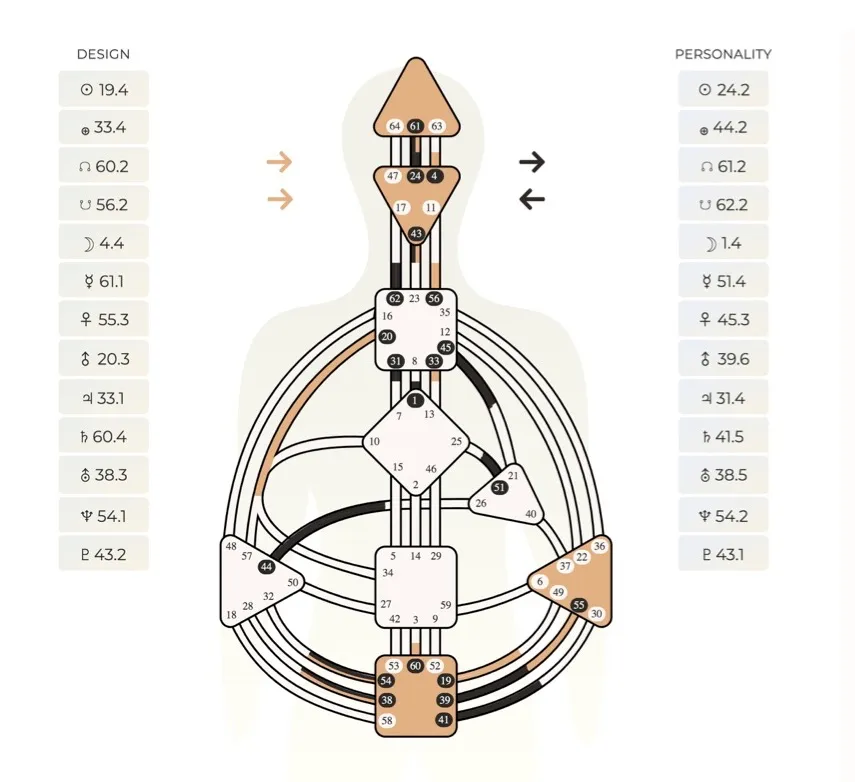
Don’t know your Human Design? You can look up your chart for free at mybodygraph.com or geneticmatrix.com. You’ll need your exact birth time for accuracy. No need to understand all the pieces yet — I’ll help you make sense of it.

Why Leadership Advice Can Trigger Burnout — And How Human Design + Nervous System Awareness Changes Everything

Why Leadership Advice Can Trigger Burnout

And How Human Design + Nervous System Awareness Changes Everything

Have you ever left a leadership workshop feeling more exhausted than energised — even when the content was good?


For women experiencing quiet burnout — still performing at a high level but feeling mentally foggy, emotionally flat, or constantly over-capacity — traditional leadership advice can sometimes make things worse.


Your Nervous System Filters Advice First

Before your brain can rationalise new ideas, your body is already running them through a safety check:

  • Is this safe for me?
  • Does this fit my reality?
  • Is this worth my energy?


If you’ve been overfunctioning for years, your system may:

  • Absorb urgency and pressure that isn’t yours
  • Reject ideas just to protect you from overwhelm
Woman leaving a leadership workshop feeling depleted from high-functioning burnout

How Human Design Fits In

Human Design offers a map of how you’re wired to receive, process, and act on information. Paired with nervous system awareness, it helps you:

  • Spot when urgency isn’t yours
  • Know when resistance is fear vs wisdom
  • Honour your decision-making rhythm
  • Build capacity so clarity comes naturally
 

Common Patterns:

  • Open root/sacral: You rush because you’ve absorbed someone else’s urgency
  • Emotional authority: You need time to ride an emotional wave before deciding
  • Splenic authority: You need to discern intuition from anxiety
 

The Burnout Connection

Overriding your natural wiring creates a chronic stress response, increasing the risk of physical symptoms, emotional exhaustion, and loss of motivation.


A Nervous-System-Led Alternative

When you work with your wiring, you can:

  • Make confident decisions without spiralling
  • Reclaim energy from rest and aligned action
  • Build a role and schedule that reflects your current values and capacity
 

Ready to Explore This Work?

You can start with:

  1. Clarity Intensive — A 90-min session to identify your current capacity and map next steps
  2. 1:1 Coaching — Longer-term support to create a sustainable, burnout-proof role and rhythm.

Don’t know your Human Design? You can look up your chart for free at mybodygraph.com or geneticmatrix.com. You’ll need your exact birth time for accuracy. No need to understand all the pieces yet — I’ll help you make sense of it.