

What If It’s Not Just “Stress”?
Most of the women I work with are brilliant, thoughtful, and deeply capable.
They’ve been praised for how much they can hold and quietly wonder how much longer they can keep holding it.
Quiet burnout is tricky. You might still be productive. Still show up to meetings. Still run the business or manage the team. But inside… something feels off.
Why Quiet Burnout Is So Hard to Catch
Especially for emotionally intelligent women
You’re trained to keep going.
You’ve done therapy. You’re emotionally aware.
You know how to regulate yourself.
You know how to push through.
But this kind of burnout is sneaky, not because it’s mild, but because it’s been normalized.
You might Google phrases like:
- “I love my job but I’m just not motivated”
- “Why am I tired even after resting?”
- “Work feels meaningless but I can’t quit”
And the results don’t quite fit.
Because what you’re experiencing is a slow loss of your inner spark, your vision, your energy.
This is especially common for:
- Neurodivergent women
- Highly sensitive nervous systems
- Professionals with trauma history or chronic illness
- People conditioned to please, perform, or overfunction
What Happens If You Don’t Catch It?
Quiet burnout doesn’t stay quiet forever.
Left unaddressed, it usually does one of three things:
1. It deepens into depletion
That low-level fog becomes chronic fatigue.
You wake up exhausted. You feel no motivation, even for things that matter.
Every decision feels like a trap.
“Even after the weekend, I still feel tired.”
“I can’t feel excitement anymore — even for things I used to love.”
2. It spills into your health
You’re still working — but now with headaches, digestive issues, a frozen cycle, or autoimmune symptoms that traditional medicine can’t explain.
“I feel fine in public, but I crash the moment I’m alone.”
“I need structure, but not pressure. I can’t handle any more pressure.”
3. It distorts your thinking
You lose self-trust. You overthink simple decisions.
You no longer feel like you.
“I’m tired of pretending I’m okay just to get through the day.”
“I function on autopilot. But inside, I feel nothing.”
Common Quiet Burnout (You Might Be Missing)
These subtle patterns are your nervous system’s early warning signs.
COGNITIVE + EMOTIONAL
- You feel mentally foggy, even after resting
- You second-guess simple choices
- You dread Mondays but can’t explain why
- You over-analyze conversations long after they happen
- You can’t feel excited about anything — even things you used to love
- You show up for life and work or your own busines, but feel empty or numb inside
“Every decision feels like a trap — even what to eat.”
“I used to have so much drive. Now it’s just pressure and silence.”
NERVOUS SYSTEM + SOMATIC
- You wake at 3am wired or anxious
- You crave sugar, wine, or screen time to come down
- You feel nauseous before meetings
- You can’t drop into rest, even with free time
- You cancel plans because your body feels shut down
- You’re constantly managing symptoms no doctor can fully explain
“I’m learning to walk away when I’m overwhelmed.”
“I want to be someone who is calm — even if the world is in chaos.”
BEHAVIORAL + RELATIONAL
- You zone out with your phone but don’t enjoy it
- You stop reading self-help books because they feel overwhelming
- You forget small things constantly — tabs always open (literal + metaphorical)
- You feel mildly irritable all week and completely wiped by Friday night
- You avoid conflict at work to “keep the peace,” but feel increasingly resentful
- You’ve started wondering: “Do I have ADHD? PMDD? Is this anxiety? Depression? (And maybe all of them feel half-true)
- You’re afraid that if you really slow down, something inside might collapse, thinking “If I let myself feel it… I might not be able to get back up.”
“I don’t even know what I like doing anymore. I just… exist.”
“I hope one day I can wake up and not feel dread in my chest.”
Why Does This Happen?
The context you’re living in.
On one side: systems and responsibilities. The pressure to keep a job, pay a mortgage, show up for your people. Capitalism doesn’t make rest feel safe.
On the other side: a kind of freedom that no one taught you how to use. Flexible work, access to healing tools, more choice than ever… but still, your body says no.
If you’re neurodivergent, highly sensitive, chronically ill, or emotionally attuned… this conflict is even sharper.
What To Do Next
(btw, you don’t need to burn it all down)
As a somatic coach and therapist who’s lived through my own waves of burnout and supports clients in your position, everyday, I’ve created numerous types of support, designed to meet you.
- Book a Clarity Session — a 90-minute deep dive to create a burnout prevention plan designed for your body and your life.
- Listen to the Sustainable Success, The Podcast — no fluff, hacks or spiritual bypassing. Short, deep episodes on burnout, ambition, and nervous system alignment.
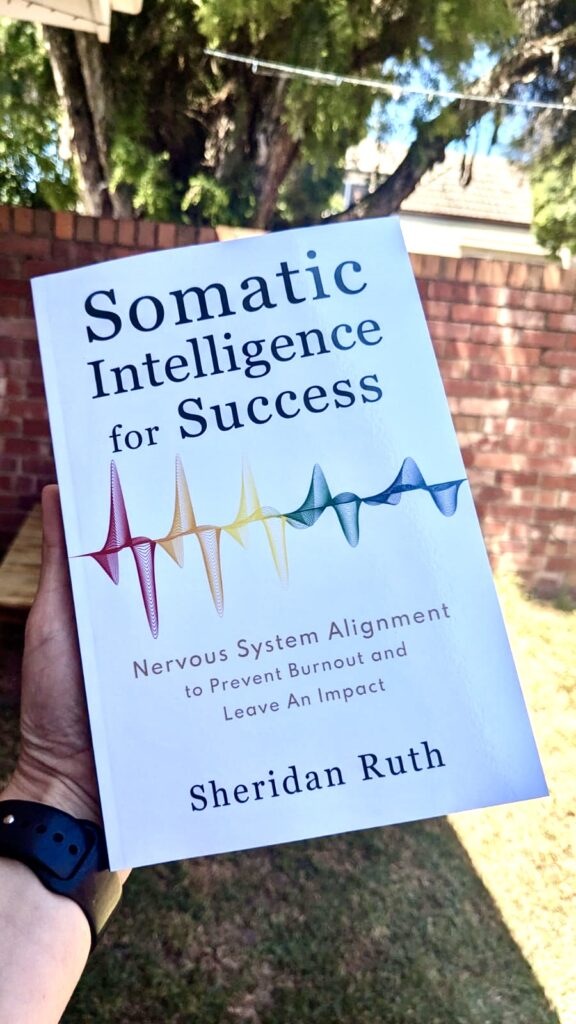
- Explore the Book — Somatic Intelligence for Success is your nervous-system-first guide to healing and sustainable success.